When you're navigating life with ADHD, you may find yourself feeling overwhelmed by the various support options available. Some people recommend therapy, others suggest coaching and the distinction isn't always clear. If you're uncertain about whether ADHD coaching or therapy suits your needs, this article will guide you through what each offers, their benefits and how they differ.
Understanding these differences is crucial to making an informed decision about the support that will best help you manage ADHD challenges. In this article, we'll explore what ADHD coaching specifically provides, how it differs from therapy and what you can expect from coaching sessions.
What Does ADHD Coaching Involve?
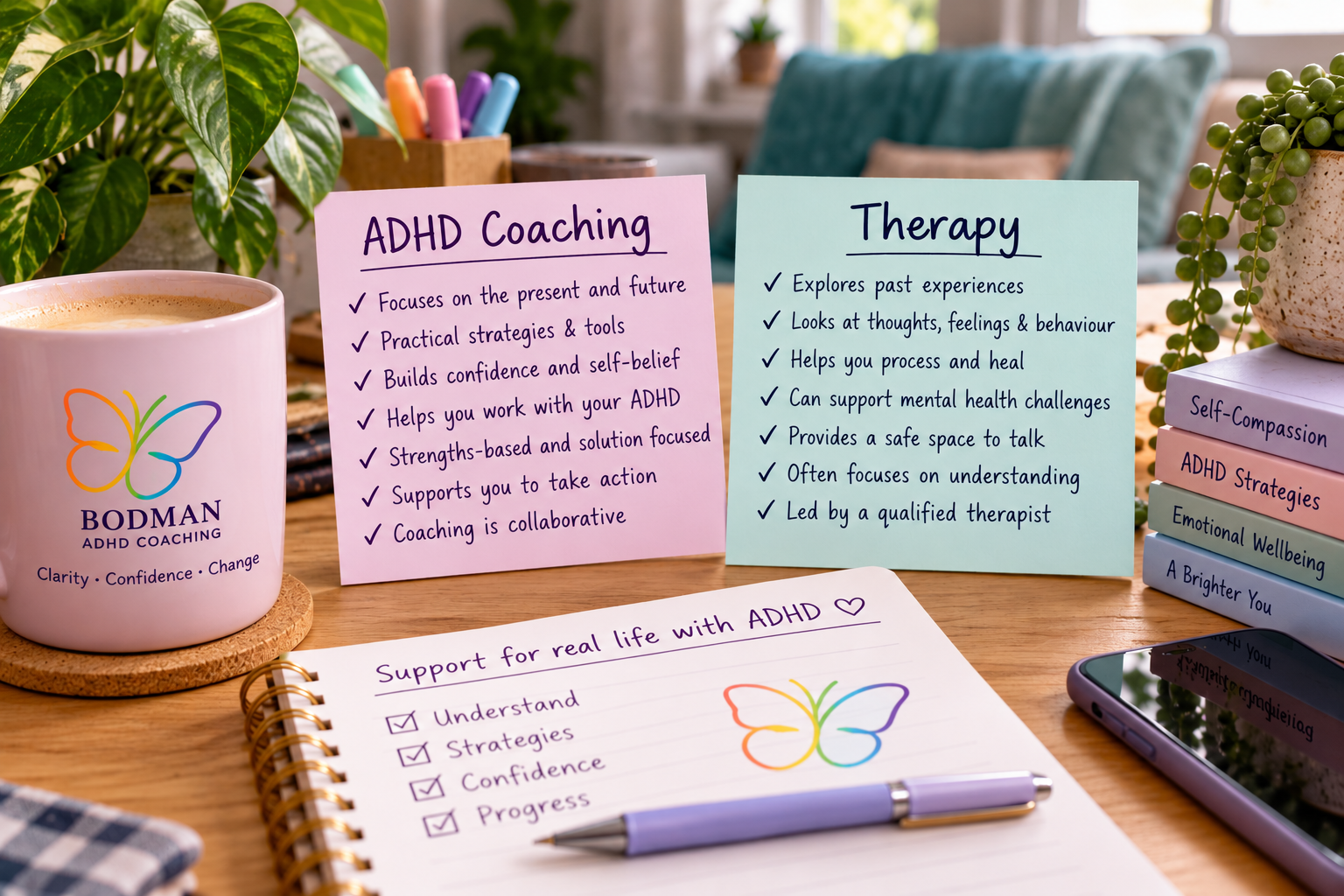
ADHD coaching focuses primarily on practical, day-to-day strategies to help you manage your symptoms. As a coach, my approach is about understanding your unique brain function, leveraging your strengths and building systems that truly fit into your life. A session typically involves goal setting, identifying obstacles and developing strategies tailored to your needs. Rather than delving into emotional or psychological issues, we work on actionable tasks that can bring about improvement in your daily routines and responsibilities. Learn more about how ADHD coaching helps here.
How is Coaching Different from Therapy?
One of the main differences between ADHD coaching and therapy is the focus of the sessions. Coaching aims at practical, solution-focused approaches to daily challenges, while therapy tends to explore emotional and psychological experiences more deeply. Therapists are often medically trained and may diagnose conditions or explore past trauma, whereas ADHD coaches like myself focus on helping you build structure and routines.
It's also worth noting that coaching does not replace medical advice. If you're ever unsure whether coaching or therapy is more appropriate, it can be constructive to discuss this with a healthcare professional. Therapy could be more suitable when addressing deeper emotional welfare issues alongside managing daily tasks.
Is ADHD Coaching Right for You?
Deciding if ADHD coaching is the right fit involves assessing your current needs and goals. If you're looking for tangible strategies to improve time management, organisation or motivation, coaching could be beneficial. However, if you need to explore emotional blocks or complex psychological issues, therapy might be more suitable. You may find that combining both types of support offers the most comprehensive care.
The effectiveness of coaching largely depends on your goals and willingness to implement strategies. Coaching is particularly helpful if you're motivated to see changes in your organisational skills, procrastination habits or ability to manage time effectively.
Who Benefits the Most from ADHD Coaching?
ADHD coaching is versatile and can benefit people of all ages. Whether you're a teenager grappling with school demands or an adult navigating career responsibilities, coaching offers the tools to create meaningful progress. Parents might also find coaching beneficial for their children, as it can provide strategies tailored to young people's developmental needs. To understand how coaching works for different age groups, take a look at our guidance for children and teens and adults.
Coaching provides an adaptable framework that can help you or your loved ones feel empowered in daily pursuits, particularly when paired with an understanding of ADHD-specific challenges.
What Happens in a Typical Coaching Session?
A typical ADHD coaching session is highly individualised. We begin by identifying your goals for the session and discussing any current challenges. Sessions can cover anything from time management and organisation to handling procrastination. We aim to end each session with an actionable plan you feel confident implementing. You might want to get a better understanding of how coaching works before booking.
You'll leave each session with a step-by-step strategy, focusing on the initial tasks that often seem overwhelming. Understanding how to transition from thinking to action is a critical theme in ADHD coaching.
Does Coaching Provide Long-term Support?
Coaching doesn't necessarily have to be a long-term commitment but it can certainly be an ongoing form of support. Many individuals start with a few sessions to tackle immediate issues and then check in periodically for maintenance as needed. It’s a flexible process and can adapt to suit your life’s evolving demands. If you feel ready to explore coaching further, take the step to book a 1-to-1 coaching session with me and find out how it can genuinely complement your needs.
Coaching is not a substitute for medical advice, diagnosis or treatment. If you are concerned about ADHD symptoms or medication, please speak to your GP or an appropriate qualified clinician.
Could You Combine Coaching and Therapy?
Combining ADHD coaching with therapy can offer a holistic approach to managing ADHD. While therapy dives into emotional and mental health issues, coaching targets your everyday organisational challenges. This combination can be particularly beneficial if you are looking to gain deeper self-awareness while also wanting practical tools to deal with daily life efficiently.
The information gathered through therapeutic interventions can often complement the actionable steps and strategies provided in coaching sessions. Discuss with both your therapist and coach to create a collaborative approach that addresses all facets of your ADHD management.
Try This One Thing
Before deciding to proceed with coaching, take a moment to assess what areas of your life feel unmanageable. Write these down and think about whether addressing them with structured, practical strategies would prevent day-to-day overwhelm. This simple act can create clarity on whether ADHD coaching suits your current needs.